Designing for Expansion: Re-thinking Financial Flows for the US Market
Company
Prolific
Role
Service Designer
Stakeholders
Focus & Themes
What motivates people to choose one task over another in a crowded AI research marketplace?
When urgency, reward and participant behaviour collide, engagement becomes a design problem. In this project I explored how clearer incentives could increase completion rates for priority research studies while supporting participant autonomy and trust in the system.
The outcome was a focused reward mechanism that helped align participant behaviour with business priorities and user expectations in a measurable and understandable way.
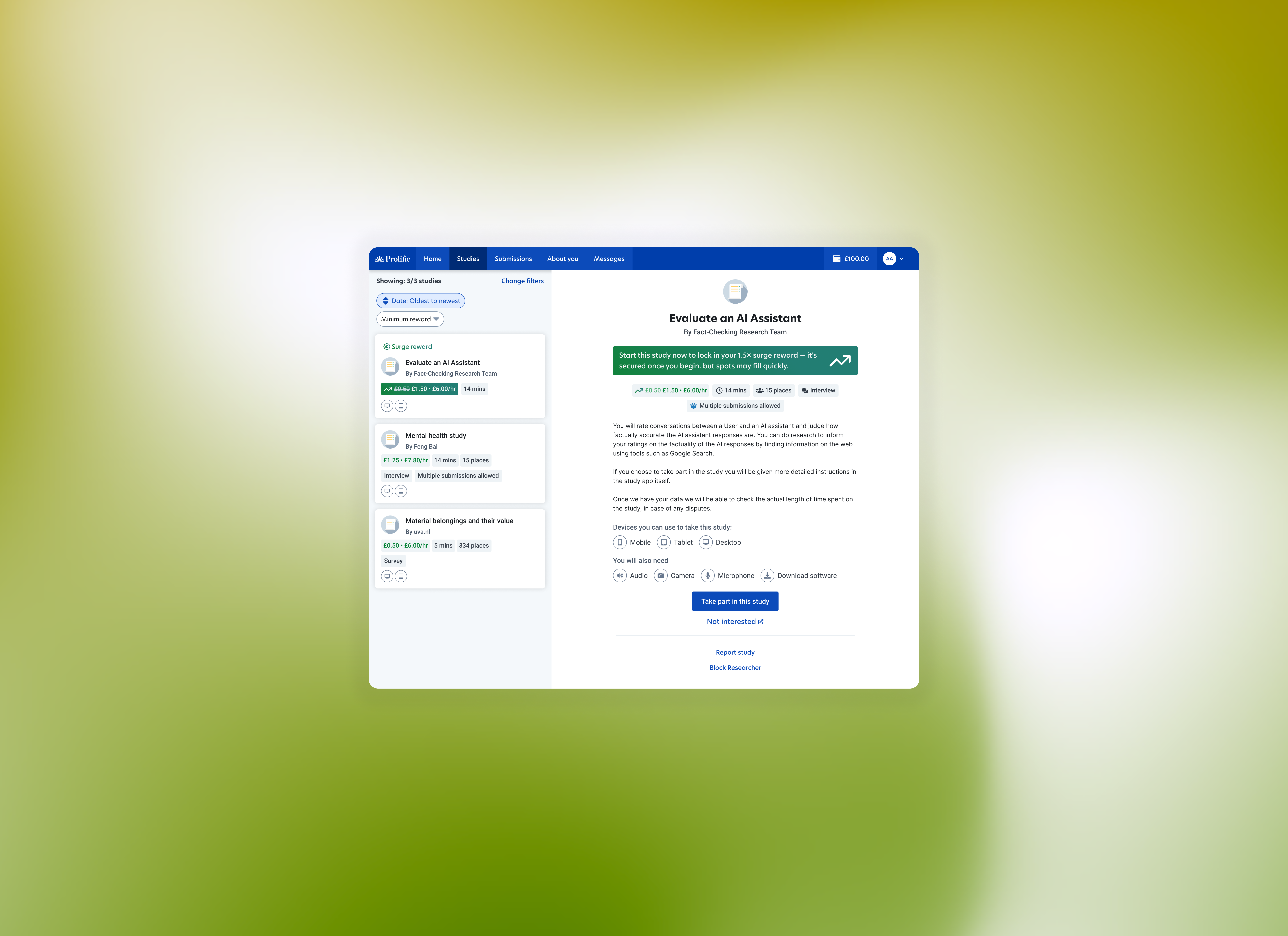
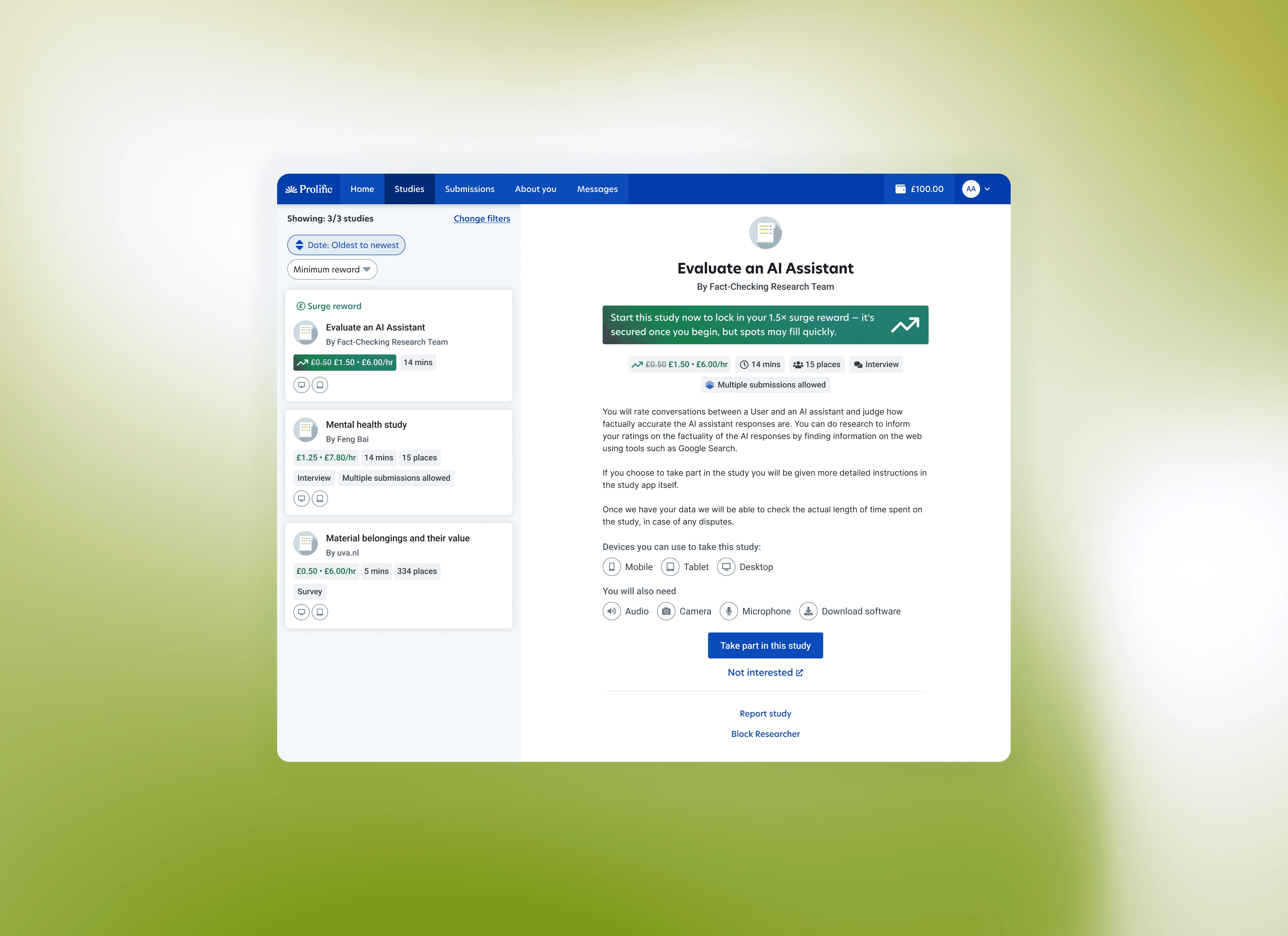
🧠 The Challenge
Our team was falling short on Service Level Agreements (SLAs) for a high-priority client. Specifically, we were not completing research studies quickly enough due to low participant engagement in “priority studies” a segment of research projects deemed urgent by the client.
The problem was clear: participants weren’t motivated to choose these studies over others. If we didn’t resolve this quickly, we risked damaging both the client relationship and broader delivery metrics.
🧩 My Role
I led the design strategy for addressing this challenge alongside another designer. My role spanned end-to-end from identifying engagement barriers, running collaborative ideation workshops, and designing a new incentive experience, to working cross-functionally to align the solution with business and operational needs.
💡 Discovery & Ideation
We kicked off with joint ideation sessions, mapping out the current participant journey and identifying friction points. Through a Crazy Eights workshop with the broader team, we generated a wide range of ideas from visual nudges and tagging systems to more ambitious gamified solutions like badges and streaks.
One promising idea we explored heavily was gamification: we investigated how techniques like progress tracking, XP points, and challenges could be used to drive engagement. While this path showed strong potential, we ultimately decided to deprioritise it due to concerns around feasibility and user clarity in the current system.
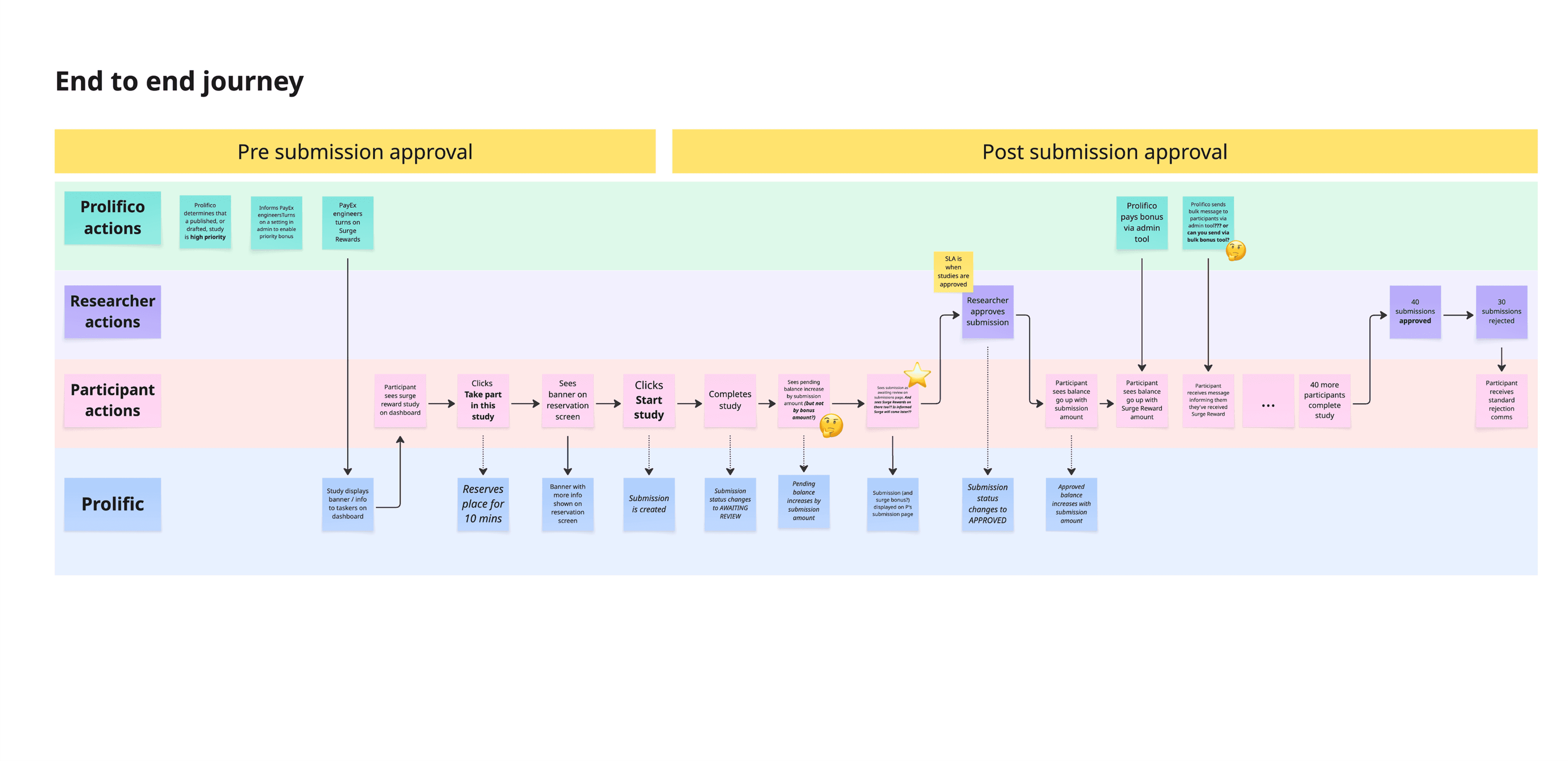
🚀 The Solution: Surge Rewards
Instead, we introduced a more direct and measurable mechanism: Surge Rewards.
This feature increased participant compensation for completing specific “priority studies,” clearly flagged in the UI. The design goal was to:
Surface urgency without overwhelming users
Create a sense of opportunity and reward
Guide user decision-making subtly, not coercively